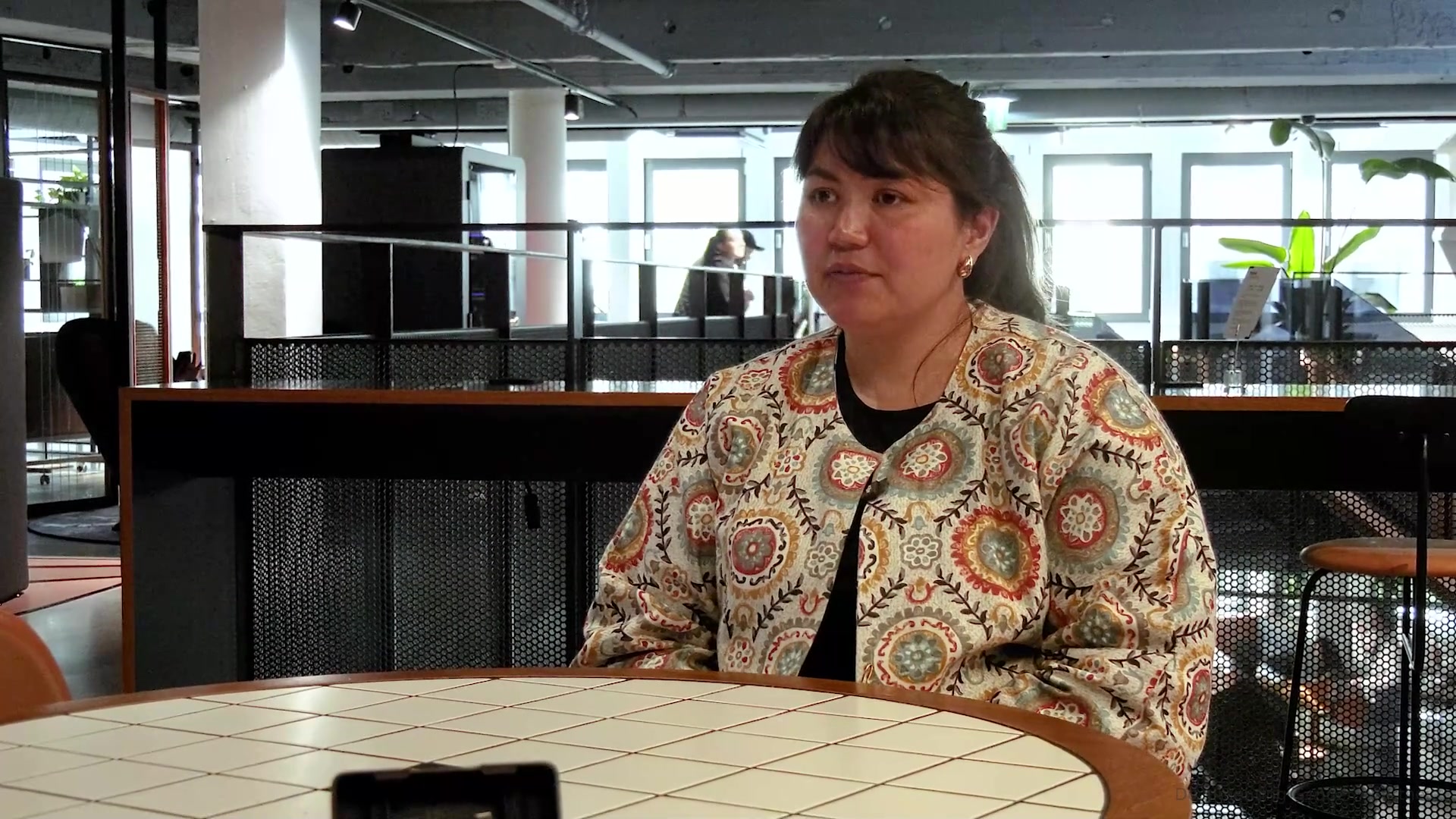


Friba Rezayee is an Afghan athlete and women’s rights advocate, born and raised in Afghanistan, and one of the country’s first female Olympic athletes. In the interview, she speaks from direct experience about living under systemic gender discrimination and the realities of gender apartheid imposed by the Taliban.
Rezayee describes gender apartheid as a deliberate system that places men as superior and women as inferior, enforced through laws, social control, and violence. She explains that the Taliban’s return to power in 2021 marked not a change but a continuation of the same ideology and practices seen in the 1990s, including severe restrictions on women’s movement, education, work, and public life.
Drawing on her own life, she reflects on discrimination she faced even before the Taliban, highlighting Afghanistan’s deeply rooted patriarchal culture, particularly in sport. She details how rules such as the mahram requirement and the closure of schools and workplaces have effectively confined women to their homes, creating a permanent state of isolation and fear.
Rezayee also warns that Taliban influence extends beyond Afghanistan through collaborators and ideological pressure within diaspora communities. She concludes that meaningful change inside Afghanistan is impossible without sustained international pressure and refusal to legitimise the Taliban, emphasising that education and women’s voices remain central threats to extremist control.
Rezayee describes gender apartheid as a deliberate system that places men as superior and women as inferior, enforced through laws, social control, and violence. She explains that the Taliban’s return to power in 2021 marked not a change but a continuation of the same ideology and practices seen in the 1990s, including severe restrictions on women’s movement, education, work, and public life.
Drawing on her own life, she reflects on discrimination she faced even before the Taliban, highlighting Afghanistan’s deeply rooted patriarchal culture, particularly in sport. She details how rules such as the mahram requirement and the closure of schools and workplaces have effectively confined women to their homes, creating a permanent state of isolation and fear.
Rezayee also warns that Taliban influence extends beyond Afghanistan through collaborators and ideological pressure within diaspora communities. She concludes that meaningful change inside Afghanistan is impossible without sustained international pressure and refusal to legitimise the Taliban, emphasising that education and women’s voices remain central threats to extremist control.