
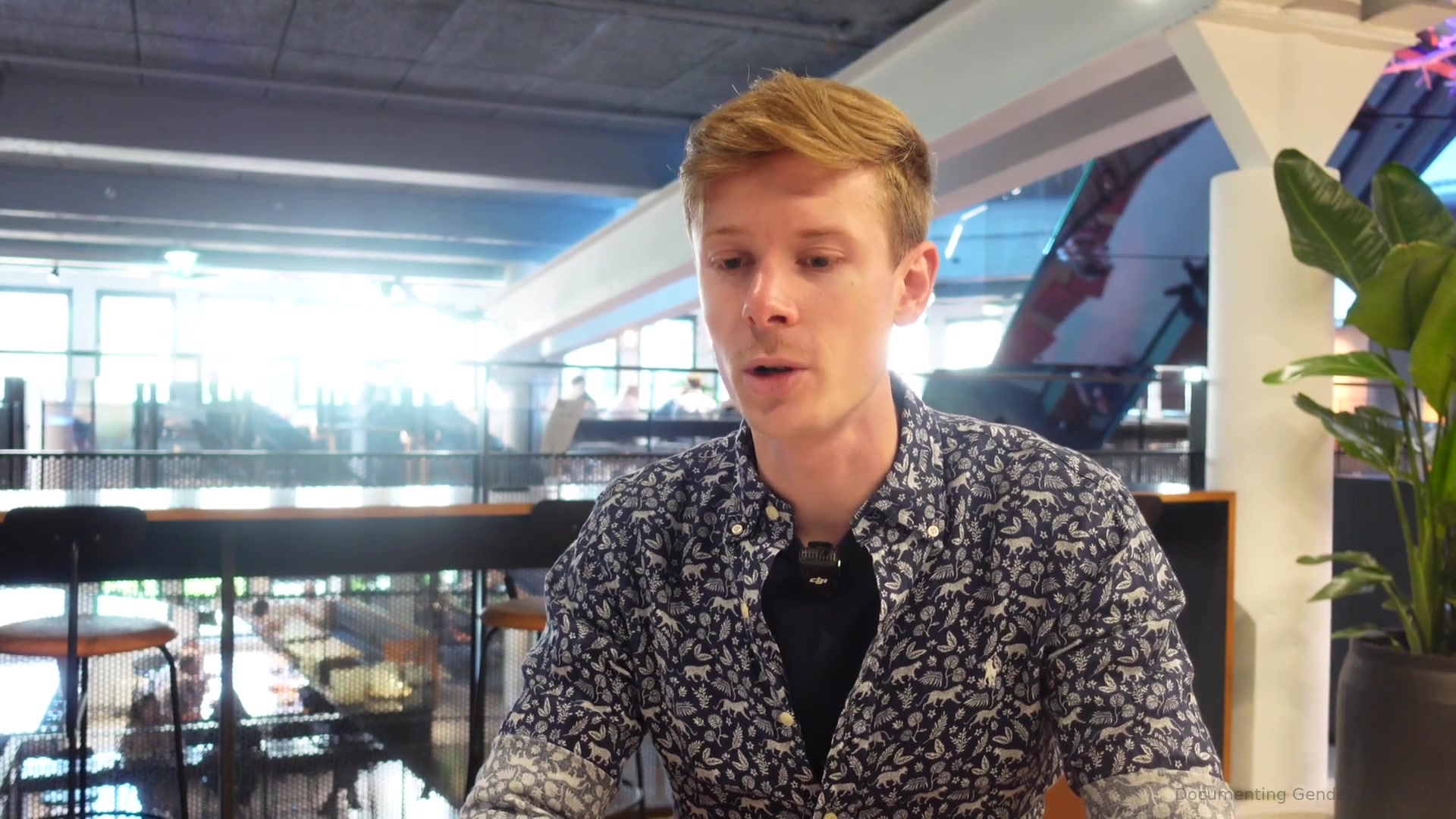
 Currently in Austria
Gabriel is a financial advisor from Austria, working within a small, family-run business. He entered the financial sector through an early interest in Bitcoin, which became a bridge between alternative financial technologies and the traditional financial industry in Austria. For Gabriel, this work is not only technical or economic, but deeply connected to questions of human rights, autonomy, and access.
His understanding of the relationship between finance and human rights developed through exposure to the work of human rights advocates who use decentralised financial tools to support people living under repressive systems. He describes Bitcoin as a means of financial sovereignty: a way for individuals to hold and transfer money without reliance on banks, surveillance by authorities, or permission from governments. In this sense, financial access becomes a matter of personal freedom and safety rather than convenience.
From this perspective, Gabriel views financial exclusion as one of the most severe and often overlooked dimensions of gender apartheid. He points to systems in which women are denied access to bank accounts or formal financial services, leaving them dependent on male relatives or state-controlled institutions. In such contexts, he sees decentralised digital currencies as offering a rare form of independence, enabling women to hold money privately, transfer funds across borders, and support themselves or their families without external control or oversight.
As a witness, Gabriel draws attention to the stark contrast between the financial freedoms available to women in Europe and the restrictions faced by women in countries affected by gender apartheid, including Afghanistan and parts of Africa and Latin America. He emphasises that these barriers are not abstract, but directly shape women’s ability to survive, make choices, and protect themselves. His testimony highlights how financial systems can reinforce gender-based oppression—and how alternative tools, when accessible, may offer limited but meaningful pathways to autonomy.
Through his work and reflections, Gabriel contributes a perspective from outside gender apartheid systems, focusing on the structural role of financial control and the potential of decentralised technologies as tools used by women and human rights activists to navigate and resist those constraints.
His understanding of the relationship between finance and human rights developed through exposure to the work of human rights advocates who use decentralised financial tools to support people living under repressive systems. He describes Bitcoin as a means of financial sovereignty: a way for individuals to hold and transfer money without reliance on banks, surveillance by authorities, or permission from governments. In this sense, financial access becomes a matter of personal freedom and safety rather than convenience.
From this perspective, Gabriel views financial exclusion as one of the most severe and often overlooked dimensions of gender apartheid. He points to systems in which women are denied access to bank accounts or formal financial services, leaving them dependent on male relatives or state-controlled institutions. In such contexts, he sees decentralised digital currencies as offering a rare form of independence, enabling women to hold money privately, transfer funds across borders, and support themselves or their families without external control or oversight.
As a witness, Gabriel draws attention to the stark contrast between the financial freedoms available to women in Europe and the restrictions faced by women in countries affected by gender apartheid, including Afghanistan and parts of Africa and Latin America. He emphasises that these barriers are not abstract, but directly shape women’s ability to survive, make choices, and protect themselves. His testimony highlights how financial systems can reinforce gender-based oppression—and how alternative tools, when accessible, may offer limited but meaningful pathways to autonomy.
Through his work and reflections, Gabriel contributes a perspective from outside gender apartheid systems, focusing on the structural role of financial control and the potential of decentralised technologies as tools used by women and human rights activists to navigate and resist those constraints.