 Currently in France
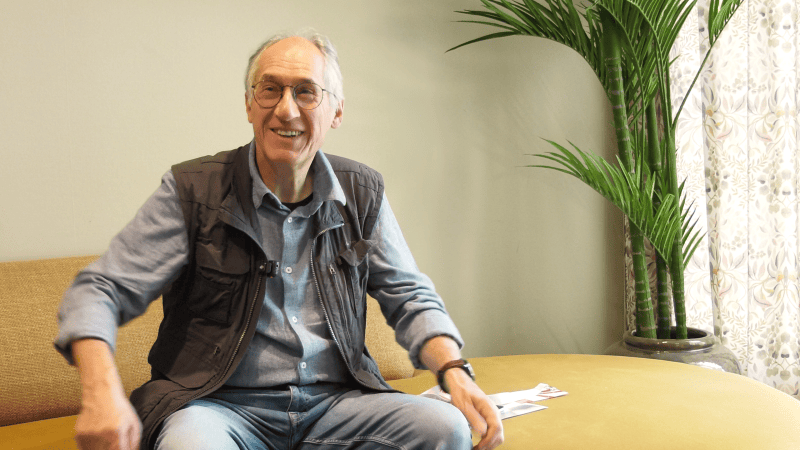
Gérard Biard is a French journalist and the editor-in-chief of Charlie Hebdo, one of Europe’s most prominent satirical newspapers. Known for his uncompromising defence of freedom of expression and secularism, Biard has long engaged with questions of political power, religion, and equality, particularly where these intersect with women’s rights.
In his interview for Documenting Gender Apartheid, Biard argues that one of the central obstacles to international recognition of gender apartheid is political power itself. He points to the influence of states such as Saudi Arabia, Qatar, Pakistan, and others within international institutions, especially the United Nations, noting that their geopolitical weight makes formal recognition difficult. Without confronting this imbalance, he warns, gender apartheid risks remaining a “beautiful idea” rather than an enforceable legal and moral framework.
Biard strongly rejects cultural relativism as a justification for systemic discrimination. He distinguishes between culture as a living, evolving phenomenon and tradition as something that can—and should—be challenged when it perpetuates harm. Practices defended as “cultural,” he argues, cannot be exempt from scrutiny when they violate constitutional principles of equality or fundamental human rights. From this perspective, he describes compulsory veiling not as a neutral religious symbol, but as part of a wider system of gender control that extends beyond individual belief.
Drawing on his journalistic experience in and around countries such as Iran, Afghanistan, and Saudi Arabia, Biard situates gender apartheid as one of humanity’s oldest forms of social organisation—embedded historically in political and religious systems designed to maintain power. Crucially, he insists that the struggle does not stop at national borders: even in liberal democracies, deeply rooted inequalities and cultural blind spots persist. He cites contemporary debates in France, including high-profile cases of sexual violence, to show how language, law, and social attitudes continue to minimise harm done to women.
Ultimately, Biard frames the fight against gender apartheid as a long, often uncomfortable process that requires persistence, self-criticism, and courage—both internationally and within supposedly egalitarian societies. His contribution underscores the need to confront power, challenge taboo debates, and continue pressing for recognition and change, even when progress is slow and resistance strong.
In his interview for Documenting Gender Apartheid, Biard argues that one of the central obstacles to international recognition of gender apartheid is political power itself. He points to the influence of states such as Saudi Arabia, Qatar, Pakistan, and others within international institutions, especially the United Nations, noting that their geopolitical weight makes formal recognition difficult. Without confronting this imbalance, he warns, gender apartheid risks remaining a “beautiful idea” rather than an enforceable legal and moral framework.
Biard strongly rejects cultural relativism as a justification for systemic discrimination. He distinguishes between culture as a living, evolving phenomenon and tradition as something that can—and should—be challenged when it perpetuates harm. Practices defended as “cultural,” he argues, cannot be exempt from scrutiny when they violate constitutional principles of equality or fundamental human rights. From this perspective, he describes compulsory veiling not as a neutral religious symbol, but as part of a wider system of gender control that extends beyond individual belief.
Drawing on his journalistic experience in and around countries such as Iran, Afghanistan, and Saudi Arabia, Biard situates gender apartheid as one of humanity’s oldest forms of social organisation—embedded historically in political and religious systems designed to maintain power. Crucially, he insists that the struggle does not stop at national borders: even in liberal democracies, deeply rooted inequalities and cultural blind spots persist. He cites contemporary debates in France, including high-profile cases of sexual violence, to show how language, law, and social attitudes continue to minimise harm done to women.
Ultimately, Biard frames the fight against gender apartheid as a long, often uncomfortable process that requires persistence, self-criticism, and courage—both internationally and within supposedly egalitarian societies. His contribution underscores the need to confront power, challenge taboo debates, and continue pressing for recognition and change, even when progress is slow and resistance strong.