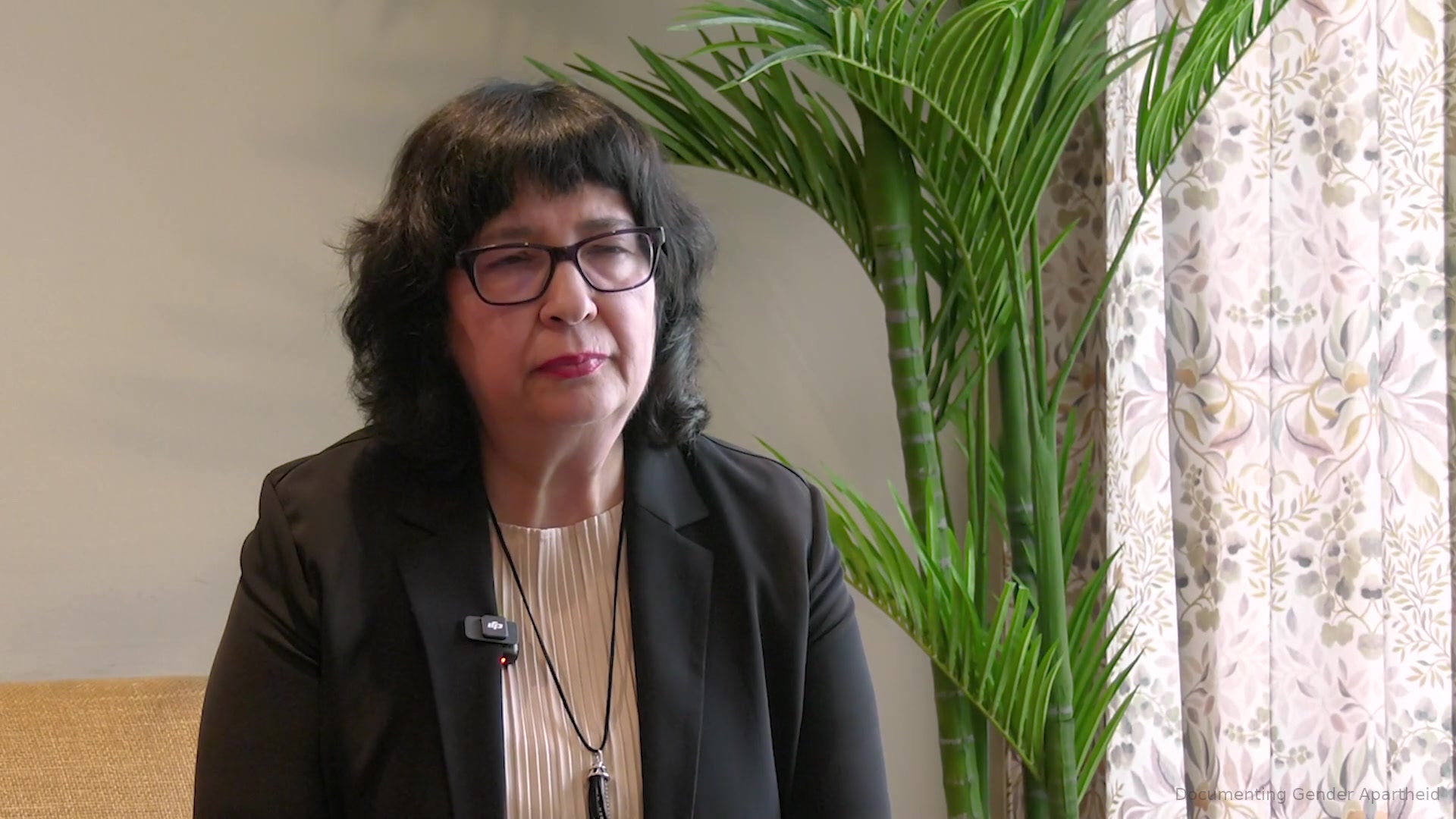


Born in Istanbul in 1963 and raised in Berlin from the age of six, she grew up in a large, traditional Sunni Muslim family with Turkish and Kurdish roots. Her early life was shaped by direct experience of gender inequality, which led her to leave home at seventeen in order to live independently and to publish her first autobiography in 1983. Alongside her studies in law, she worked with women from migrant communities who were facing patriarchal control and gender-based violence. In 1984 she survived a politically motivated shooting that left her seriously injured and forced a long break in her studies. She qualified as a lawyer in 1997 and, despite years of threats and intimidation that eventually led her to close her legal practice in 2006, she continued to engage publicly on issues of women’s rights, religion, and migration, writing several books and contributing to legal and social change.
In the interview, she describes her life as a continuous resistance to gender apartheid and patriarchy, including within religious spaces. As a practising Muslim, she argues that Islam itself contains strong foundations for gender equality, pointing to women such as Khadija and Fatima as central figures in the early history of the faith. She rejects the idea that gender segregation or the exclusion of women from leading prayer is rooted in theology, describing these practices instead as products of patriarchal and political traditions. Before opening a mosque, she undertook extensive theological research, consulting scholars and communities across Muslim-majority countries, and concluded that there is no religious basis for denying women equal participation. She frames her work not as changing Islam, but as reclaiming rights that already belong to women, emphasising that contemporary, gender-equal forms of Islamic practice exist across the Muslim world, from private prayer spaces to women openly leading mixed congregations.
In the interview, she describes her life as a continuous resistance to gender apartheid and patriarchy, including within religious spaces. As a practising Muslim, she argues that Islam itself contains strong foundations for gender equality, pointing to women such as Khadija and Fatima as central figures in the early history of the faith. She rejects the idea that gender segregation or the exclusion of women from leading prayer is rooted in theology, describing these practices instead as products of patriarchal and political traditions. Before opening a mosque, she undertook extensive theological research, consulting scholars and communities across Muslim-majority countries, and concluded that there is no religious basis for denying women equal participation. She frames her work not as changing Islam, but as reclaiming rights that already belong to women, emphasising that contemporary, gender-equal forms of Islamic practice exist across the Muslim world, from private prayer spaces to women openly leading mixed congregations.