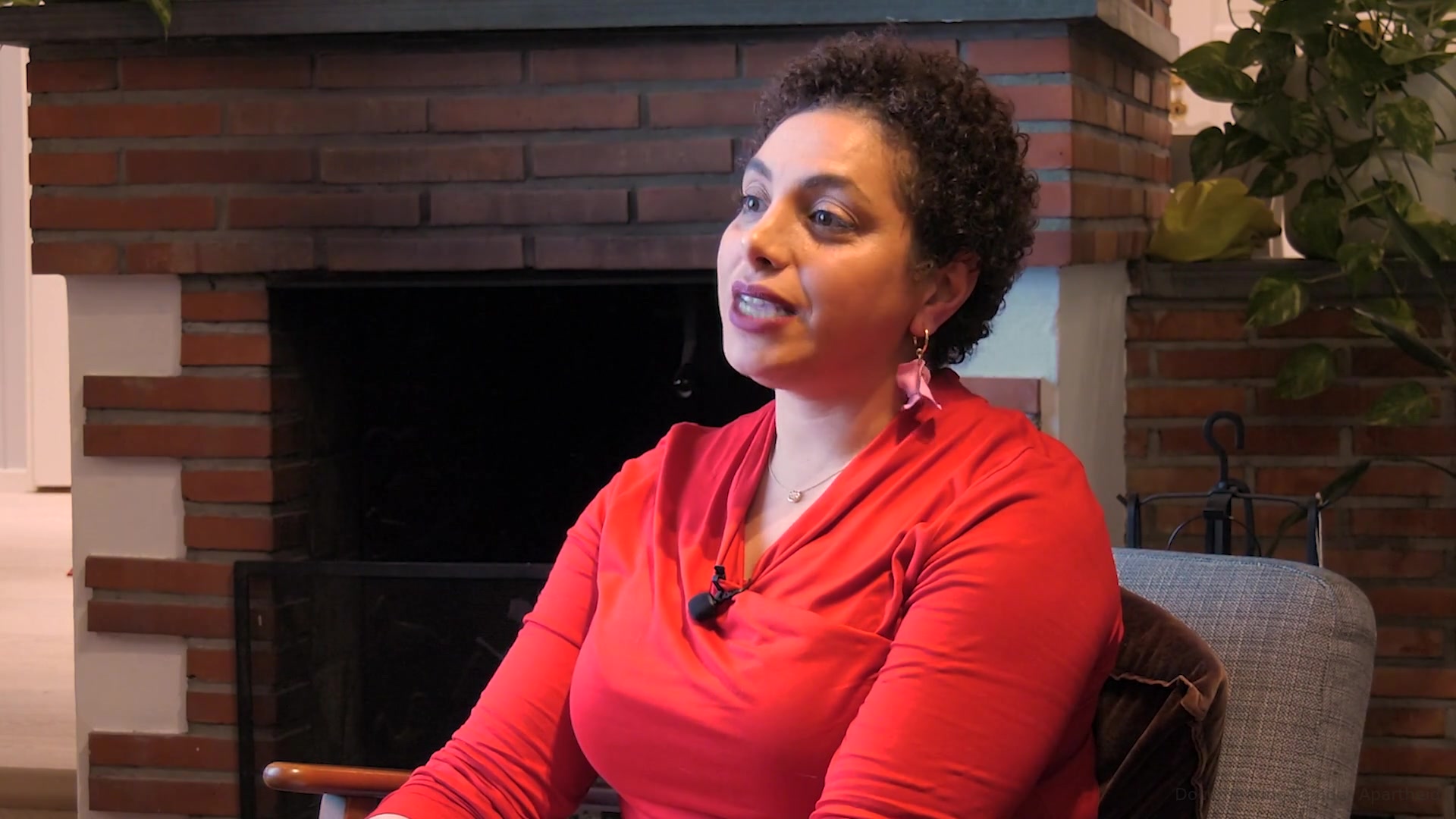

Pari Rostam is a Bakhtiari woman of Lur origin, born in Masjed Soleyman in Iran’s Khuzestan province. She grew up during the Iran–Iraq war and experienced displacement as a child, living for a period with extended family in northern Khuzestan. Raised in a non-religious family, Pari witnessed early on how gender inequality in her community was shaped less by faith than by deeply rooted cultural traditions and expectations around sons and daughters.
As the third daughter in a family that had hoped for a boy, Pari was exposed from childhood to the pressures placed on women and mothers, and to the ways patriarchal values are transmitted across generations. From a very young age, she resisted these norms, rejecting prescribed roles for girls and insisting on the same freedoms afforded to boys. Her childhood memories reflect both this resistance and the emotional impact of growing up in an environment where masculinity was privileged.
Now living in Norway, Pari reflects on how gendered control can persist even within free and democratic societies, particularly within families shaped by migration and transnational cultural expectations. As a mother herself, she has consciously sought to break cycles of gender preference and discrimination, emphasising pride, autonomy, and choice for her daughter. Through her testimony, Pari draws clear connections between her own experiences in Iran and the realities faced by some girls today in diaspora communities, including restrictions on clothing, autonomy, and personal freedom.
Pari’s story speaks to the continuity of gender-based control across borders and generations, and to the quiet but determined acts of resistance through which change begins.
As the third daughter in a family that had hoped for a boy, Pari was exposed from childhood to the pressures placed on women and mothers, and to the ways patriarchal values are transmitted across generations. From a very young age, she resisted these norms, rejecting prescribed roles for girls and insisting on the same freedoms afforded to boys. Her childhood memories reflect both this resistance and the emotional impact of growing up in an environment where masculinity was privileged.
Now living in Norway, Pari reflects on how gendered control can persist even within free and democratic societies, particularly within families shaped by migration and transnational cultural expectations. As a mother herself, she has consciously sought to break cycles of gender preference and discrimination, emphasising pride, autonomy, and choice for her daughter. Through her testimony, Pari draws clear connections between her own experiences in Iran and the realities faced by some girls today in diaspora communities, including restrictions on clothing, autonomy, and personal freedom.
Pari’s story speaks to the continuity of gender-based control across borders and generations, and to the quiet but determined acts of resistance through which change begins.