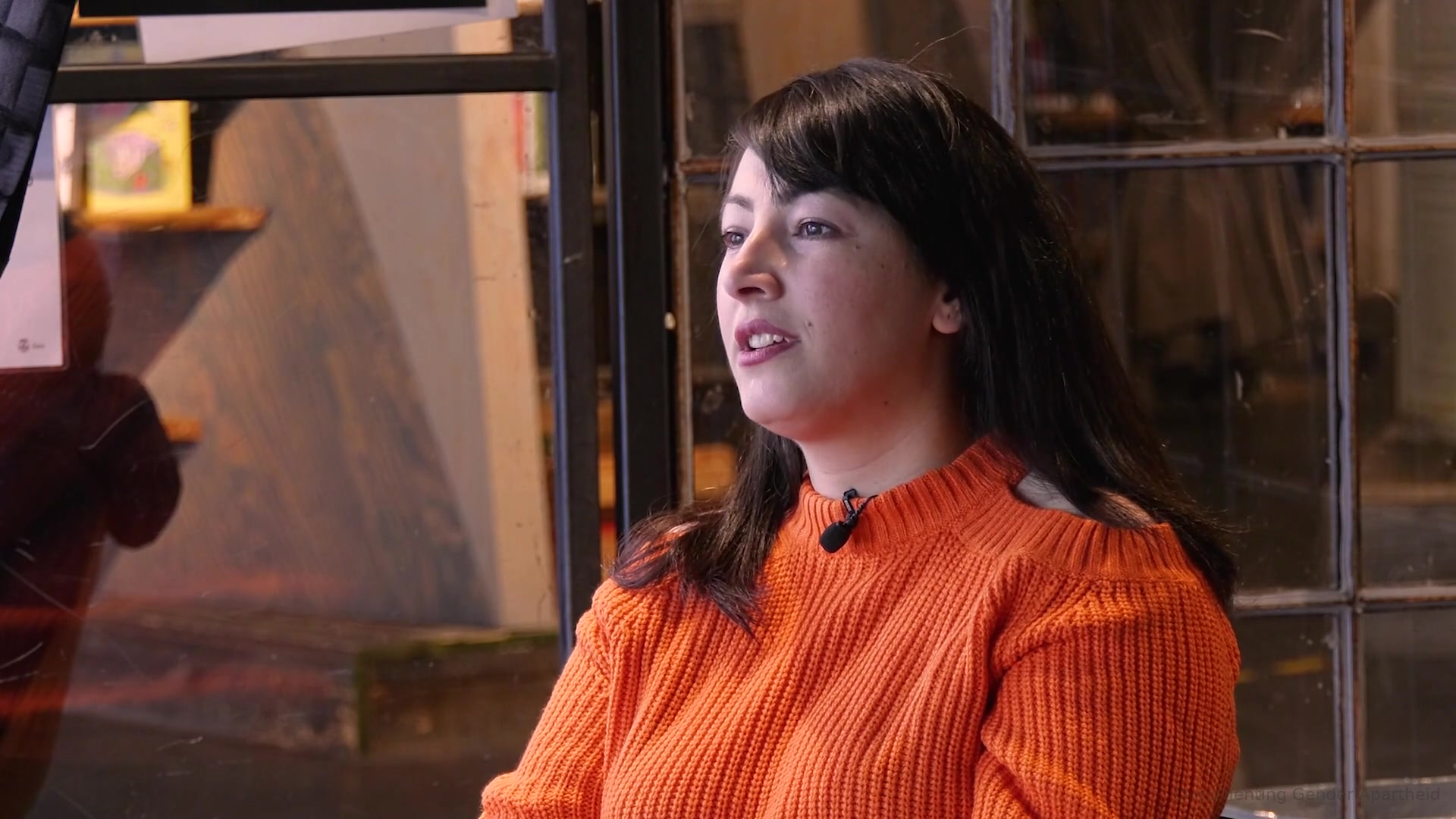



Hoda Khamosh is an Afghan poet, writer, and women’s rights activist whose voice has been forged through profound personal loss, displacement, and survival. Her testimony is inseparable from her life: it is shaped by the murder of her mother and later her sister, by forced migration, and by growing up within systems of control where violence against women was normalised, justified, and rarely punished.
Hoda was displaced from Afghanistan as a child during the first Taliban period, growing up in exile in Iran before returning years later to continue her education in Afghanistan. Her pursuit of learning unfolded under constant pressure — from family, from religious norms, and from insecurity — and required resilience rather than permission. Education was something she had to fight to access and defend.
In her interviews, Hoda recounts the killing of her mother, a woman who secretly taught herself to read and later became active in educating other women and girls. Her mother worked publicly, dressed freely, spoke openly, and encouraged girls’ education — acts that made her a target. She was ultimately killed inside her own home. The crime was covered up, framed as a matter of “honour,” and accepted by family, community, and authorities. No justice followed. Hoda was a child witness, silenced by fear and stripped of the ability to defend her mother or demand accountability.
Years later, Hoda’s sister was also killed. Forced into marriage as a child, subjected to repeated violence, surveillance, and accusations, she was stabbed by a man who had sought to marry her and been refused. As with their mother’s murder, the killing was justified through claims of immorality — phone calls, social media use, imagined relationships — and the focus of scrutiny fell not on the perpetrator but on the woman who was killed. Again, the crime went effectively unpunished.
These losses are not presented by Hoda as isolated tragedies, but as part of a wider system in which women’s lives are conditional, their bodies controlled, and violence excused through family authority, cultural norms, and institutional complicity. Her interviews trace how honour-based violence, forced marriage, policing of women’s clothing, and denial of legal protection operate together — across generations and across borders.
Writing became Hoda’s means of survival and resistance. Poetry and language allowed her to hold memory against erasure, to name what could not safely be spoken, and to transform grief into testimony. Her work carries the weight of lived experience: of exile, of gender apartheid, of loss without justice. Activism followed naturally from this — not as abstraction, but as an insistence on truth, visibility, and accountability.
Today, Hoda Khamosh is recognised internationally for her literary and human rights work, including her inclusion in the TIME 100 list. Yet her voice remains anchored in the experiences she documents: those of women silenced by violence, families protected over victims, and systems that reward obedience while punishing autonomy.
Hoda’s story demonstrates how survival itself can become resistance. Through testimony, poetry, and advocacy, she preserves memory, challenges impunity, and insists that the lives of women — including those taken — are neither expendable nor forgettable.
Hoda was displaced from Afghanistan as a child during the first Taliban period, growing up in exile in Iran before returning years later to continue her education in Afghanistan. Her pursuit of learning unfolded under constant pressure — from family, from religious norms, and from insecurity — and required resilience rather than permission. Education was something she had to fight to access and defend.
In her interviews, Hoda recounts the killing of her mother, a woman who secretly taught herself to read and later became active in educating other women and girls. Her mother worked publicly, dressed freely, spoke openly, and encouraged girls’ education — acts that made her a target. She was ultimately killed inside her own home. The crime was covered up, framed as a matter of “honour,” and accepted by family, community, and authorities. No justice followed. Hoda was a child witness, silenced by fear and stripped of the ability to defend her mother or demand accountability.
Years later, Hoda’s sister was also killed. Forced into marriage as a child, subjected to repeated violence, surveillance, and accusations, she was stabbed by a man who had sought to marry her and been refused. As with their mother’s murder, the killing was justified through claims of immorality — phone calls, social media use, imagined relationships — and the focus of scrutiny fell not on the perpetrator but on the woman who was killed. Again, the crime went effectively unpunished.
These losses are not presented by Hoda as isolated tragedies, but as part of a wider system in which women’s lives are conditional, their bodies controlled, and violence excused through family authority, cultural norms, and institutional complicity. Her interviews trace how honour-based violence, forced marriage, policing of women’s clothing, and denial of legal protection operate together — across generations and across borders.
Writing became Hoda’s means of survival and resistance. Poetry and language allowed her to hold memory against erasure, to name what could not safely be spoken, and to transform grief into testimony. Her work carries the weight of lived experience: of exile, of gender apartheid, of loss without justice. Activism followed naturally from this — not as abstraction, but as an insistence on truth, visibility, and accountability.
Today, Hoda Khamosh is recognised internationally for her literary and human rights work, including her inclusion in the TIME 100 list. Yet her voice remains anchored in the experiences she documents: those of women silenced by violence, families protected over victims, and systems that reward obedience while punishing autonomy.
Hoda’s story demonstrates how survival itself can become resistance. Through testimony, poetry, and advocacy, she preserves memory, challenges impunity, and insists that the lives of women — including those taken — are neither expendable nor forgettable.