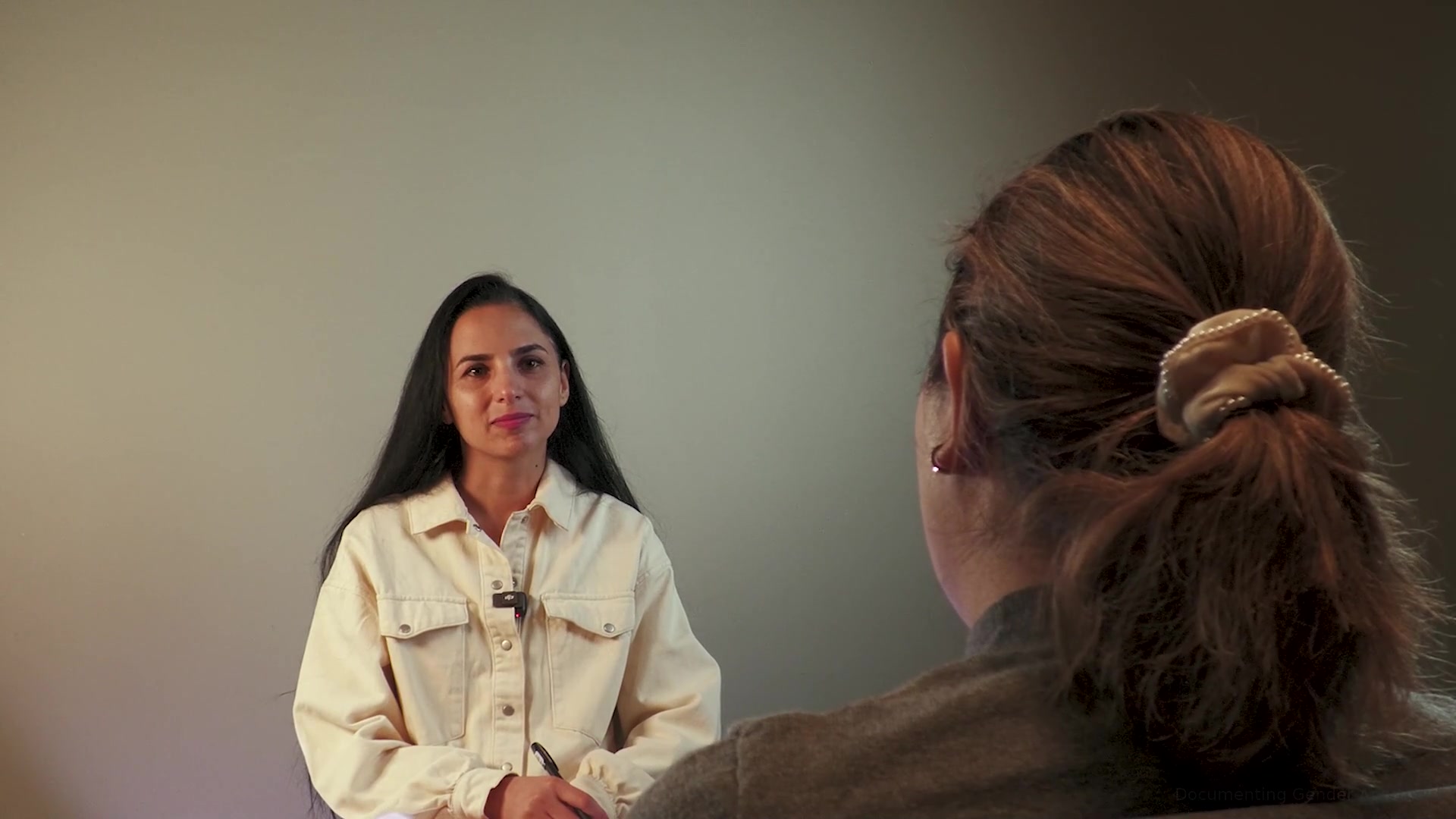



Sahar is an Afghan woman who was born and raised in Iran, where she lived until her early twenties. Although Iran was the only home she knew, her life there was shaped by legal exclusion, restricted rights, and strict gender control imposed on women and girls.
Growing up, Sahar experienced the everyday realities of Gender Apartheid: compulsory hijab, constant surveillance of women’s bodies and behaviour, and limited freedom of choice. From a young age, her clothing, appearance, and movement were closely monitored, both by the state and within her family. While her father supported her education and independence, other family pressures reinforced rigid gender norms and control.
Despite significant barriers, Sahar pursued higher education in Iran. Like many Afghan women, her studies were repeatedly disrupted by discriminatory policies that restricted access to universities based on nationality and legal status. These structural obstacles, combined with gender-based restrictions, shaped her sense of insecurity and exclusion.
In 2016, Sahar migrated to Norway. The move marked a physical escape from enforced gender rules, but not an immediate freedom from their effects. After nearly thirty years of compulsory hijab, choosing whether to remove it became an emotionally complex process, shaped by fear, habit, and the weight of long-term control. Her experience reflects how Gender Apartheid continues to shape women’s lives even after they leave the systems that enforced it.
Sahar is a mother, and her testimony highlights the lasting impact of gender-based oppression, displacement, and denial of choice. Her story speaks to the quiet, gradual process of reclaiming autonomy after a lifetime lived under enforced inequality.
Growing up, Sahar experienced the everyday realities of Gender Apartheid: compulsory hijab, constant surveillance of women’s bodies and behaviour, and limited freedom of choice. From a young age, her clothing, appearance, and movement were closely monitored, both by the state and within her family. While her father supported her education and independence, other family pressures reinforced rigid gender norms and control.
Despite significant barriers, Sahar pursued higher education in Iran. Like many Afghan women, her studies were repeatedly disrupted by discriminatory policies that restricted access to universities based on nationality and legal status. These structural obstacles, combined with gender-based restrictions, shaped her sense of insecurity and exclusion.
In 2016, Sahar migrated to Norway. The move marked a physical escape from enforced gender rules, but not an immediate freedom from their effects. After nearly thirty years of compulsory hijab, choosing whether to remove it became an emotionally complex process, shaped by fear, habit, and the weight of long-term control. Her experience reflects how Gender Apartheid continues to shape women’s lives even after they leave the systems that enforced it.
Sahar is a mother, and her testimony highlights the lasting impact of gender-based oppression, displacement, and denial of choice. Her story speaks to the quiet, gradual process of reclaiming autonomy after a lifetime lived under enforced inequality.